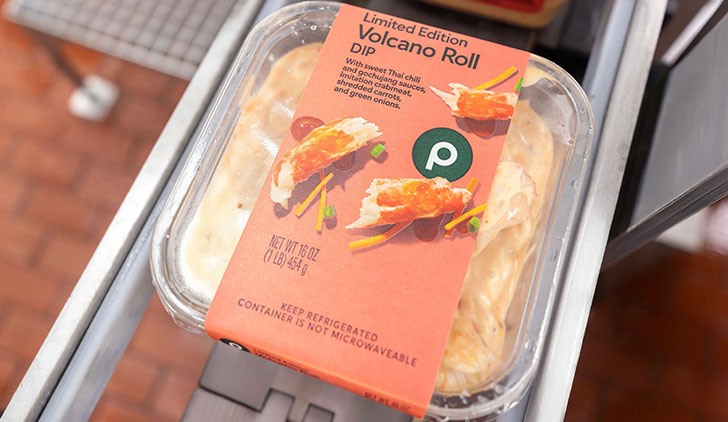
Our popular Volcano Roll Dip has taste buds buzzing. The sizzling story of how we whip up this fiery favorite began with teamwork and creativity.
Step 1
Its creation began with collaboration between our deli manufacturing research and development team and product innovation team. Their shared goal was to dream up a new dip. “For ideas, we often look to flavor trends,” said Manufacturing Team Leader Christine Mitchell. “Inspiration for this dip came from the growing popularity of sushi-inspired flavors.”
The 2 teams developed a recipe influenced by the volcano roll. The dip went through several rounds of sampling with select associates to gather feedback, refining the seasonings and ingredients with each round until the intended balance was reached.
Step 2
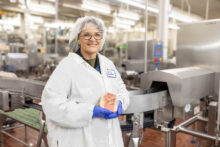
This dip is only made in our Lakeland deli kitchen and is available in 16-ounce cups. The process begins with fresh carrots and green onions. The vegetables are cleaned, diced and set aside to be later added to the dip mixture.
Step 3
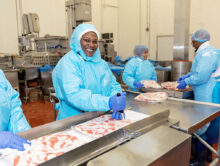
Next, members of the can-opening team prepare the remaining ingredients by opening the imitation crabmeat, sweet Thai chili sauce, gochujang (or fermented red pepper paste) and mayonnaise. “My part in making this dip is to open the packages of imitation crabmeat as they come down the conveyer belt so they’re ready for the next associates,” said Salad Support Operator Mirlande Damont.
Step 4
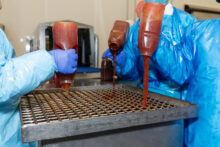
The can-opening team empties the ingredients into separate product tubs. All the ingredients, including the diced carrots and green onions, are then weighed for accuracy according to the recipe’s batch size.
Step 5
Once the correct weight is validated for each ingredient, they’re added to a blender.
“My job is to make sure everything is properly combined,” said Mixer Operator Kirk Simpson. “I add all the ingredients and seasonings to the blender, where they’re mixed together for about a minute, until smooth.”
Step 6
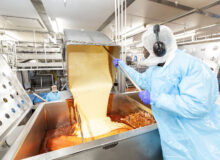
The mixture is put into a 650-pound stainless steel tub and sent to the filler room. There, the dip is transferred into the filler machine which dispenses it directly into containers. “At this step in the process, it’s my responsibility to see that the fillers put the right amount of dip into 16-ounce containers,” said Manufacturing Team Leader Chinecqua Wilson.
Step 7
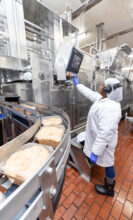
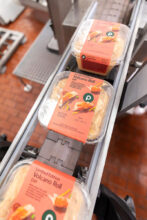
As the dip-filled containers travel down the conveyer belt, they’re sealed with plastic film and topped with a lid. After this process, each container goes across a weight checker to verify the correct volume of dip. Then, the container is labeled and marked with a use-by date. At the same time, a high-speed camera looks at every container to ensure it’s packaged correctly.
Step 8
After the final checks for quality and food safety, the containers of dip are boxed up, palletized and shipped to our distribution centers, where the dip is sent to stores.
About the Lakeland deli kitchen
When the Lakeland, Florida, deli kitchen opened in 1984, it was about half its current size and only produced a handful of our current offerings. Today, over 570 associates work at the 135,000-square-foot facility. A U.S. Department of Agriculture (USDA) inspector is on-site every time we’re making meat products. The deli kitchen is where many Publix-brand salads and dips are processed and packaged, along with a variety of our Publix Smokehouse meats like ribs, pork butts, as well as our deli meats in the service case.